· 4 MIN READ
Haiku vs Sonnet vs Opus: I Paid ₹6, ₹28 and ₹92 for Three AI Music Videos
Three Claude models, one 30-second music video each. A boat, a tomato and a very relaxed sloth. Here's what Haiku, Sonnet and Opus cost me, with charts.

It's November 2026. AI can now make you a music video while you eat your lunch. So naturally I did the only reasonable thing: I made three of them, one with each Claude model, and then stared at the bill like it owed me money.
Same idea, same tool (Claude Code), same medium effort setting. The only thing I changed was the model: Haiku 5.5, Sonnet and Opus 5.5.
Here's what came back, what it cost, and whether the expensive one is worth it. (Spoiler: annoyingly, yes.)
The bill
Every video is 30 seconds long. Claude Code estimates the cost from the tokens each model used. Here's the damage in rupees:
Estimated API cost reported by Claude Code. Medium effort for all three.
Opus cost about 16 times what Haiku did, and a bit over 3 times Sonnet. For ₹92 you could also buy a very nice plate of momos. I'll let you decide which brings more joy.
But it's not only that Opus charges more per token. It also thinks more:
Thousands of tokens used to make each video.
Opus used nearly twice as many tokens as Haiku. So you pay a higher rate, and you pay it more times. Double whammy.
Put those together and you get the price of each unit of thinking:
Total cost ÷ tokens used, from the numbers above.
Here are the same numbers as a table, for the spreadsheet people among us:
| Model (medium effort) | Tokens used | Cost | Cost per 1K tokens | Cost per second of video |
|---|---|---|---|---|
| Haiku 5.5 | 136K | ₹5.83 | ₹0.043 | ₹0.19 |
| Sonnet | 167K | ₹28.59 | ₹0.171 | ₹0.95 |
| Opus 5.5 | 253.2K | ₹92.00 | ₹0.363 | ₹3.07 |
Now watch them
Numbers are boring. Videos are not. Here's what each model actually made.
Haiku 5.5: ₹5.83
A sunset, the sea and a little person in a paper boat, just vibing. It's clean, it's calm and it's honest. Haiku looked at the brief and said: "I am a simple model. Here is a boat."
Verdict: For under six rupees, this is outrageous value. Great for drafts, quick ideas and "does this concept even work?" moments.
Sonnet: ₹28.59
Night sky, a full moon, palm trees and… a tomato sleeping in a banana-shaped hammock. I did not ask for a tomato. Nobody asked for a tomato. And yet it is the most relatable character I've seen all year.
Verdict: Clearly more scene and more charm. Sonnet is the sweet spot for most everyday work: noticeably better than Haiku without a scary bill.
Opus 5.5: ₹92
A sloth. In a hammock. On a floating island. With palm trees, flowers, clouds, birds and a full day of scenes. This sloth has a better work–life balance than every person I know.
Verdict: It's in a different league. More detail, more scenes and much better storytelling. You can feel the extra thinking.
The real flex: Opus gave me a project, not just a video
Here's the part that surprised me most. Opus didn't just hand me a finished MP4. It built the whole thing as an editable project in HyperFrames, with separate scenes (planet, bed, hammock, party, sunset and night), a timeline and the song on its own track.
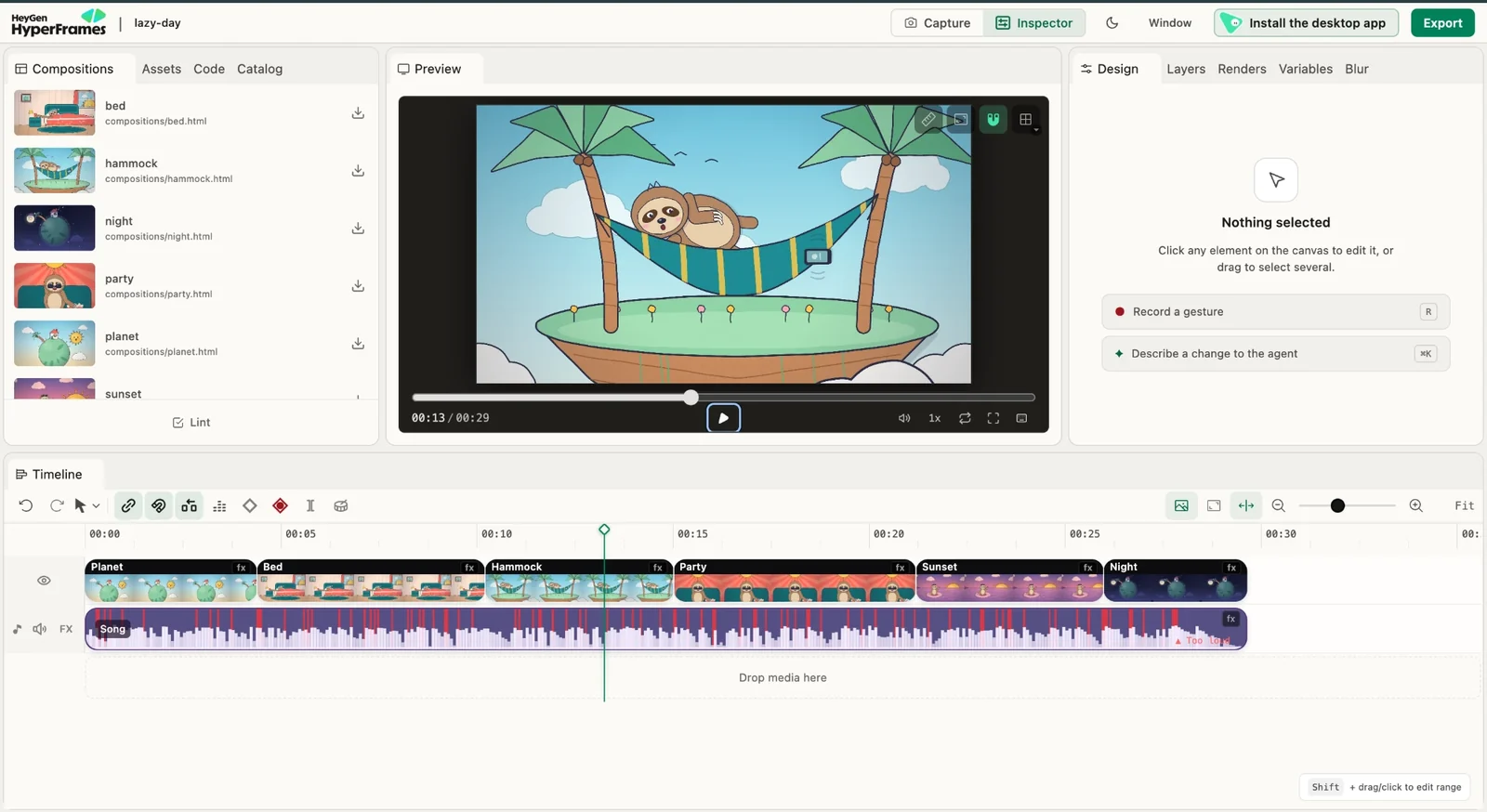
That means I can open it, swap a scene, retime the music or fix one frame myself, without asking the AI to regenerate everything. That's the difference between getting a photo of a cake and getting the recipe.
So which model should you use?
- Haiku: the intern who's surprisingly good. Use it for first drafts, quick tests and anything you'll throw away. At ₹6 a go, you can afford ten tries.
- Sonnet: the dependable teammate. The best balance of quality and cost for most real work. This is the default I'd recommend.
- Opus: the senior who costs senior money. Use it when quality really matters, when the task is complex, or when you want a result you can build on. It's by far the best, and the bill reminds you of that.
My workflow now: explore with Haiku, build with Sonnet, finish with Opus. Cheap where it doesn't matter, expensive only where it does.
The bigger picture
A year ago, "make me a music video" was a weekend project. Today it's a sentence and a cup of chai, and the worst of these three still produced something watchable for less than the price of a samosa.
The gap between the models is real, but so is the gap between all of them and what was possible not long ago. Whichever you pick, we're living in the future. It just sends you an invoice.
Which one would you pay for? Tell me on LinkedIn or X. Also tell me if you'd watch a full-length tomato movie, because I'm starting to think I would.